
Japanese Six Panel Screen: Horses in Stable
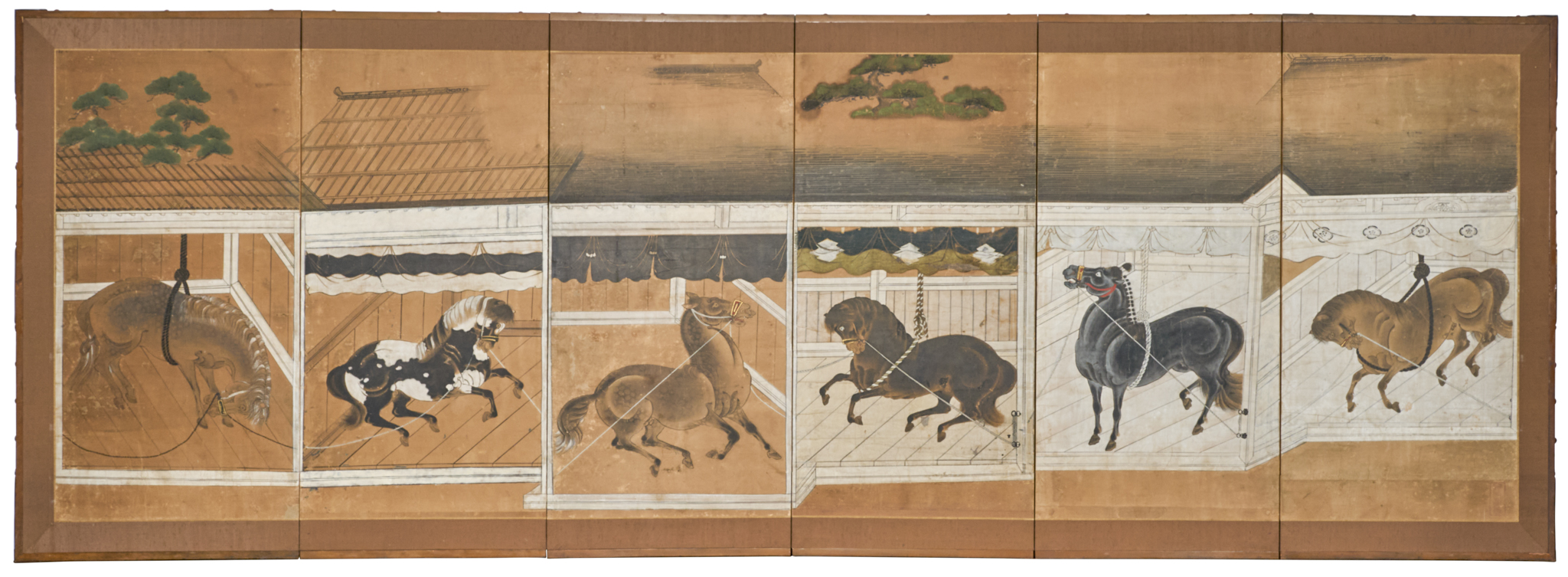
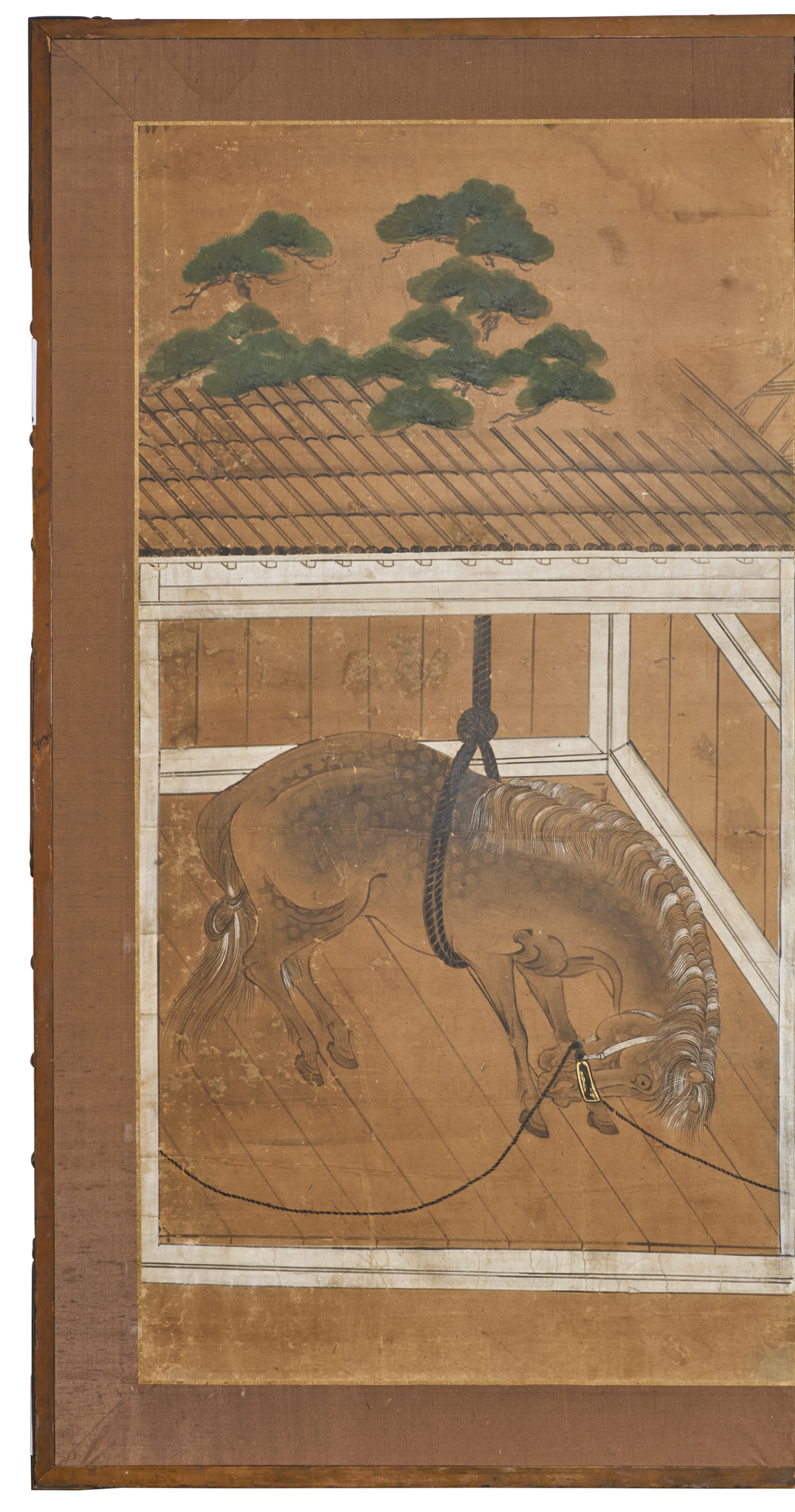
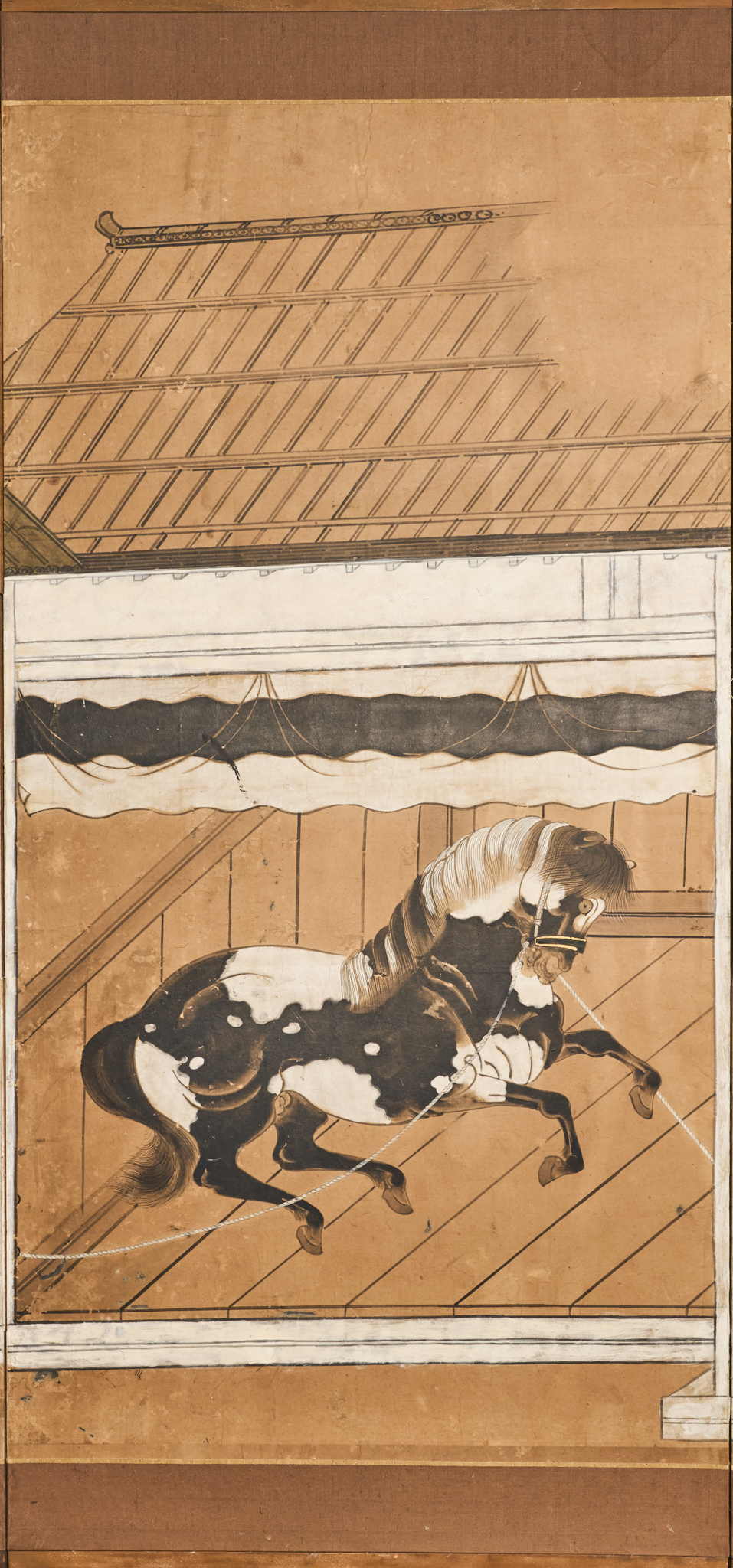
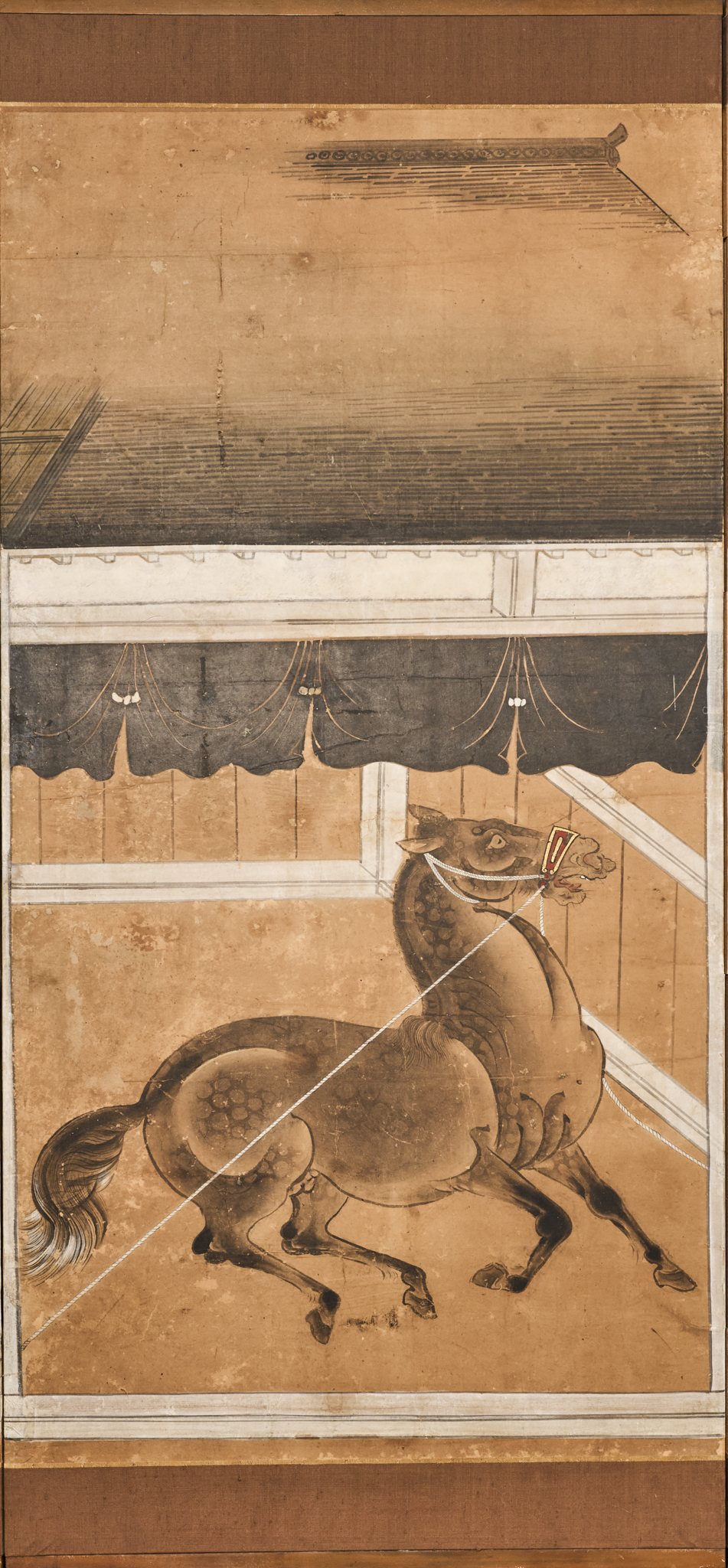
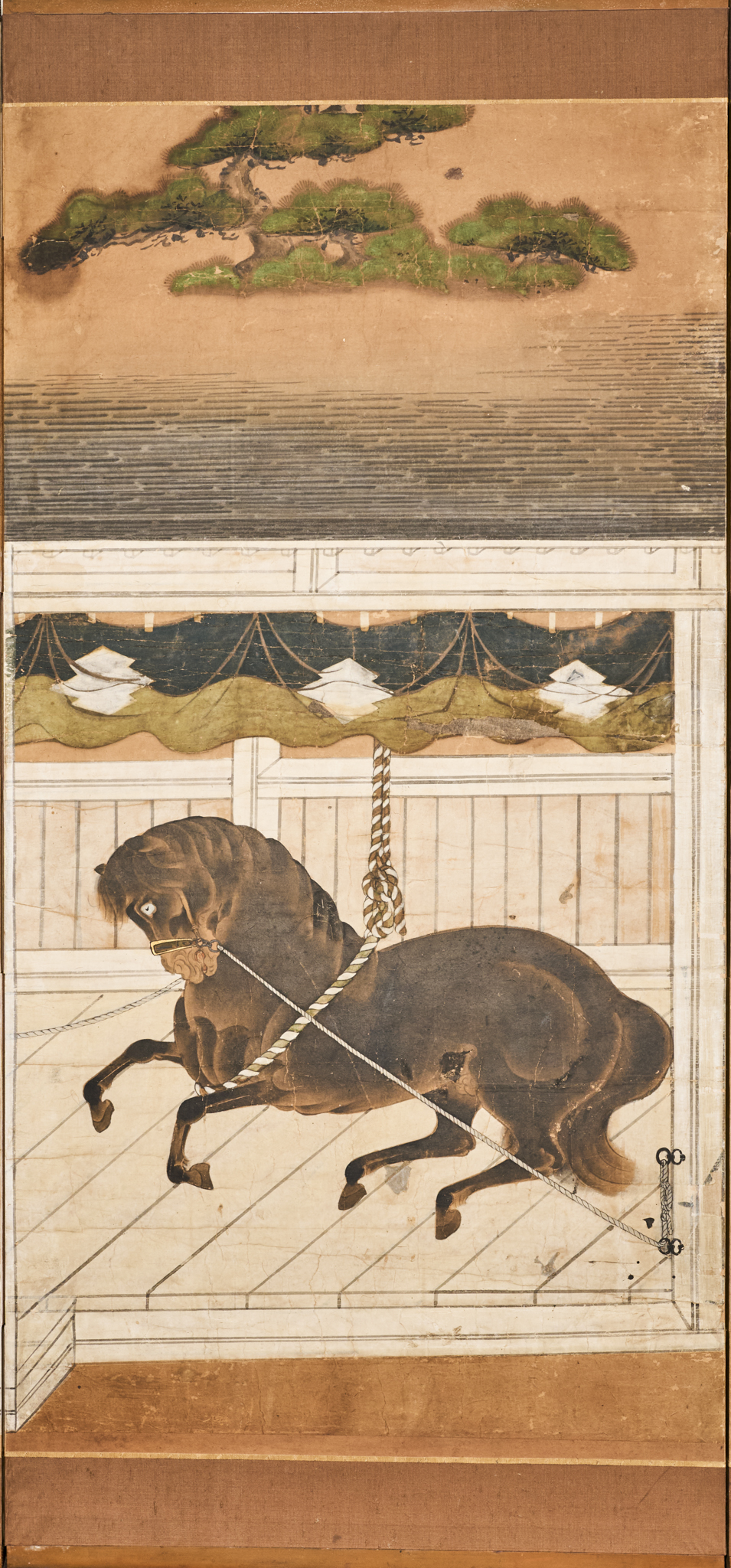
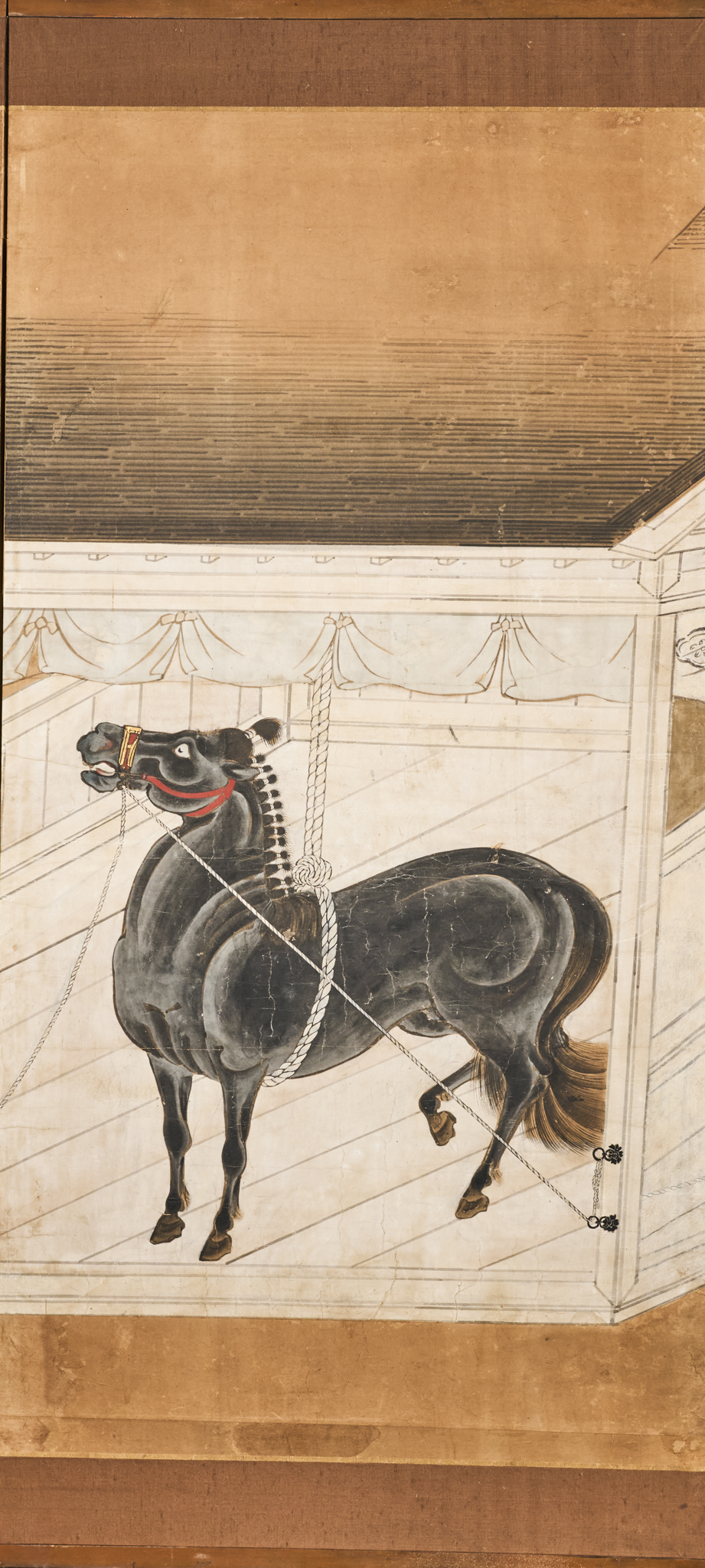
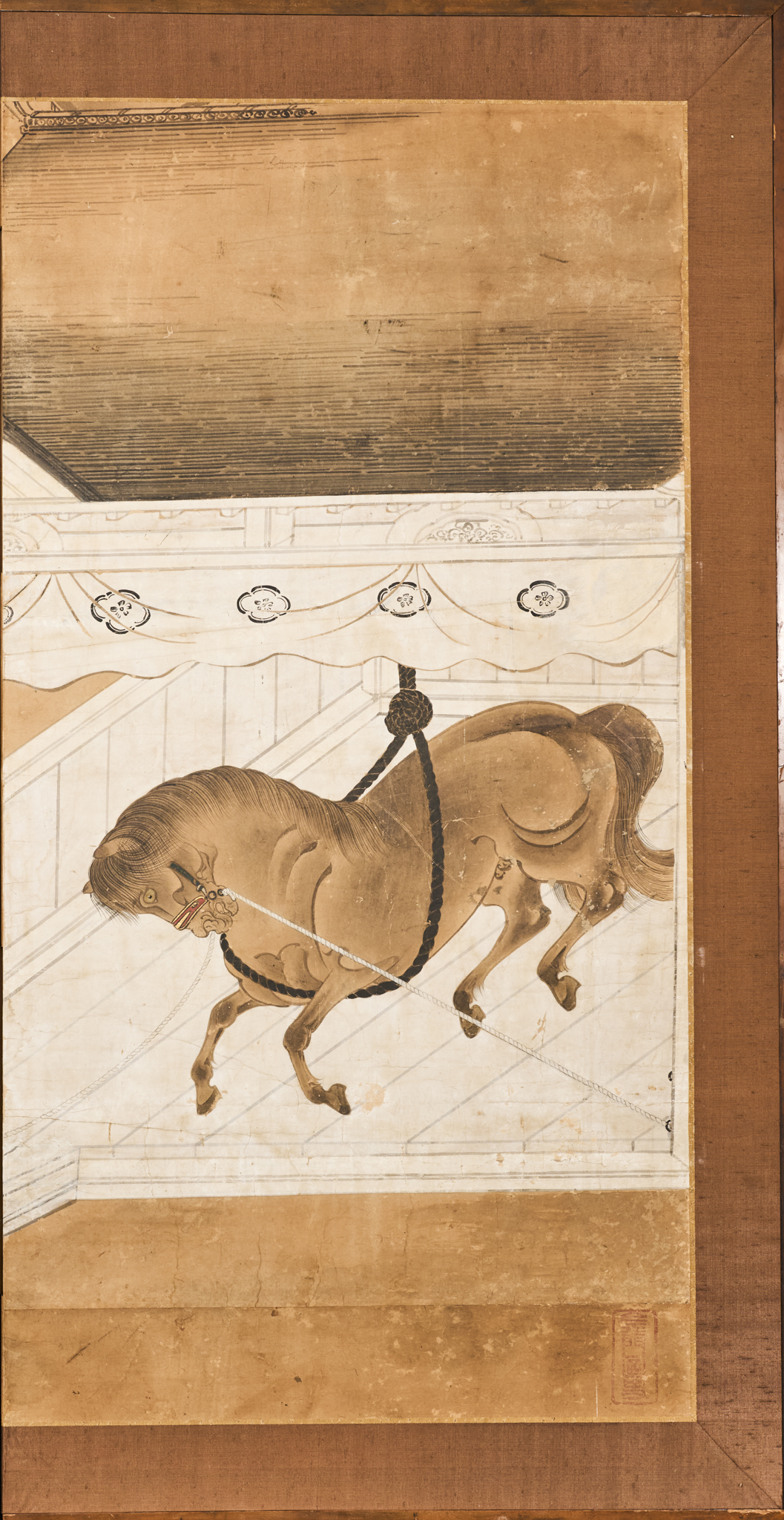
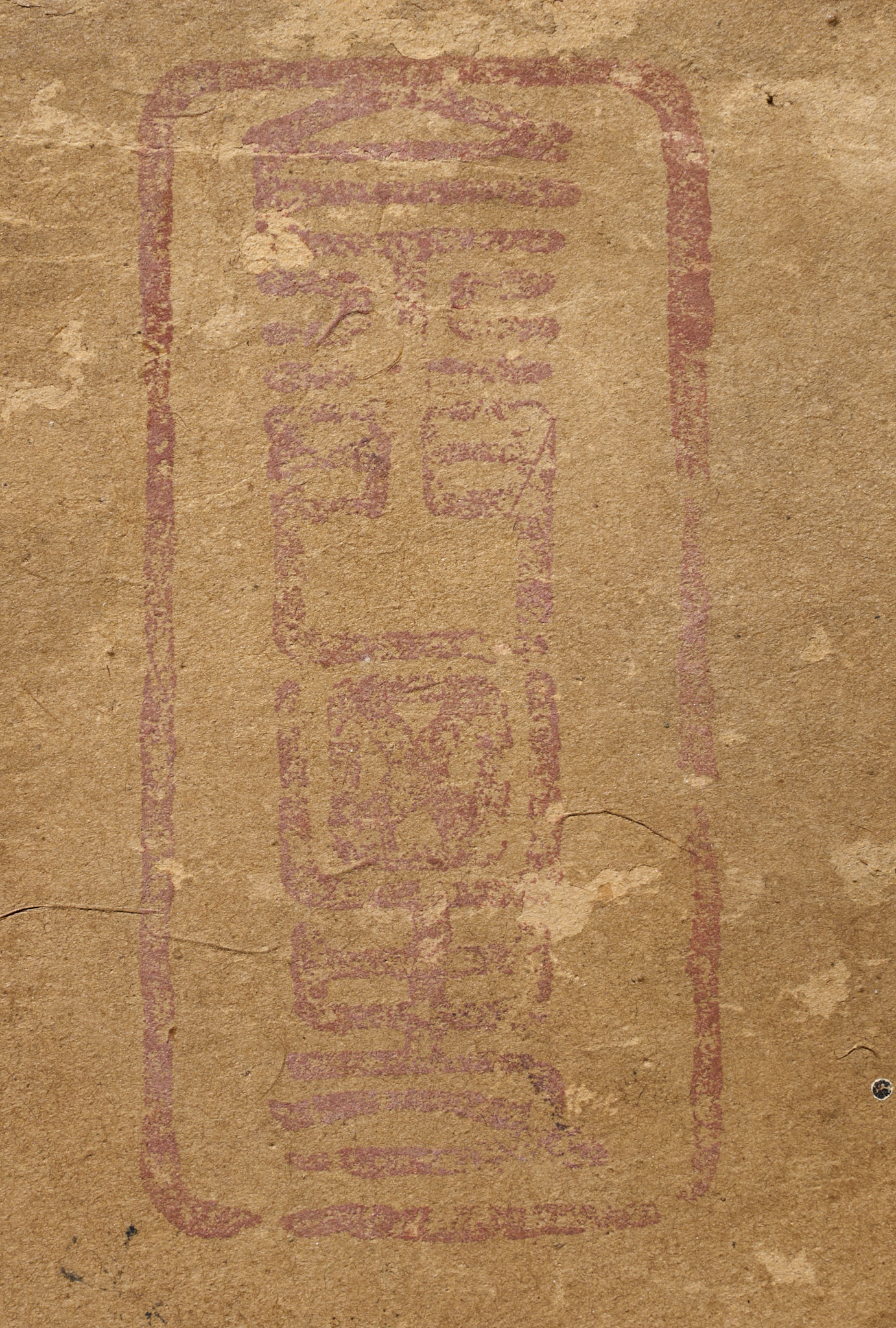
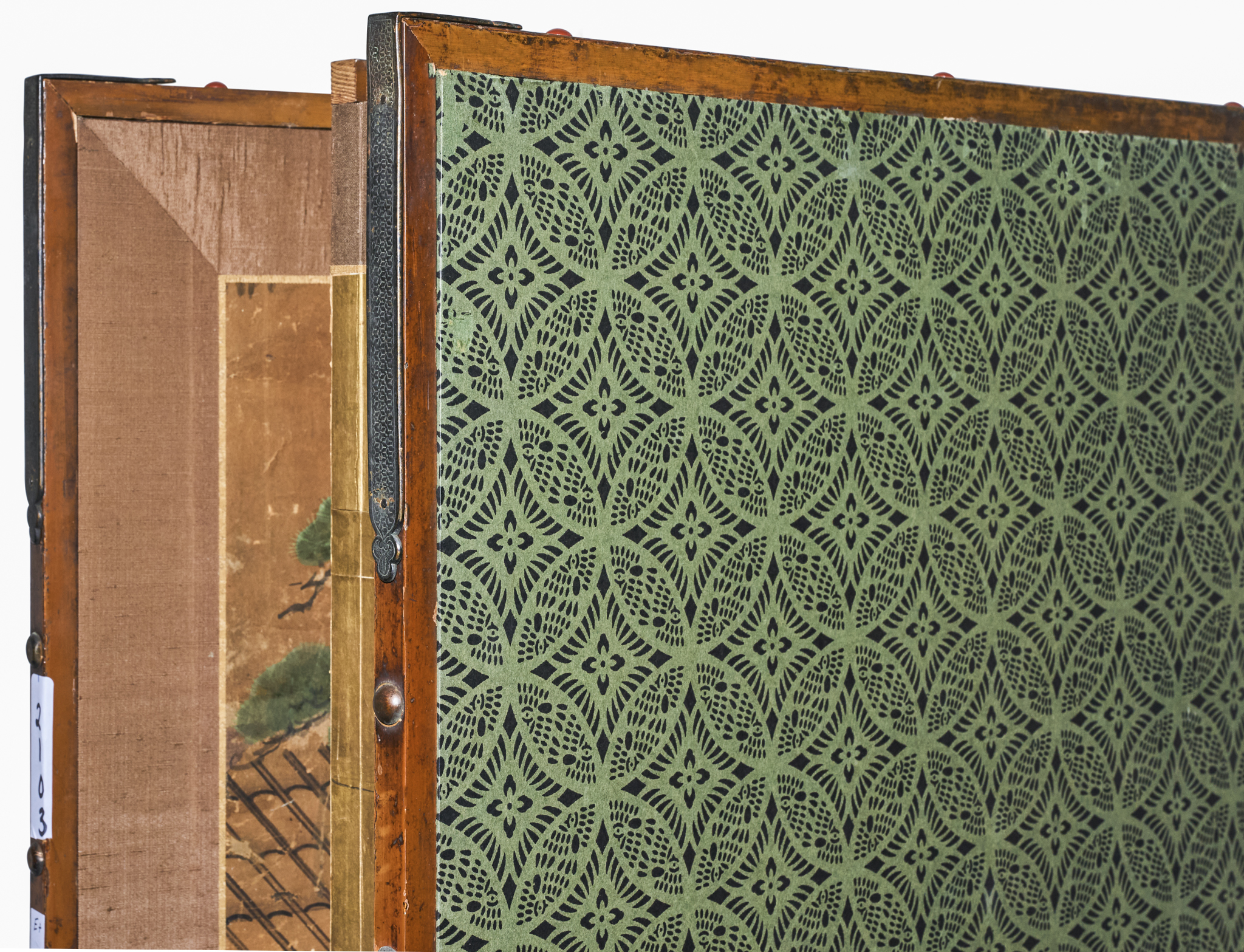
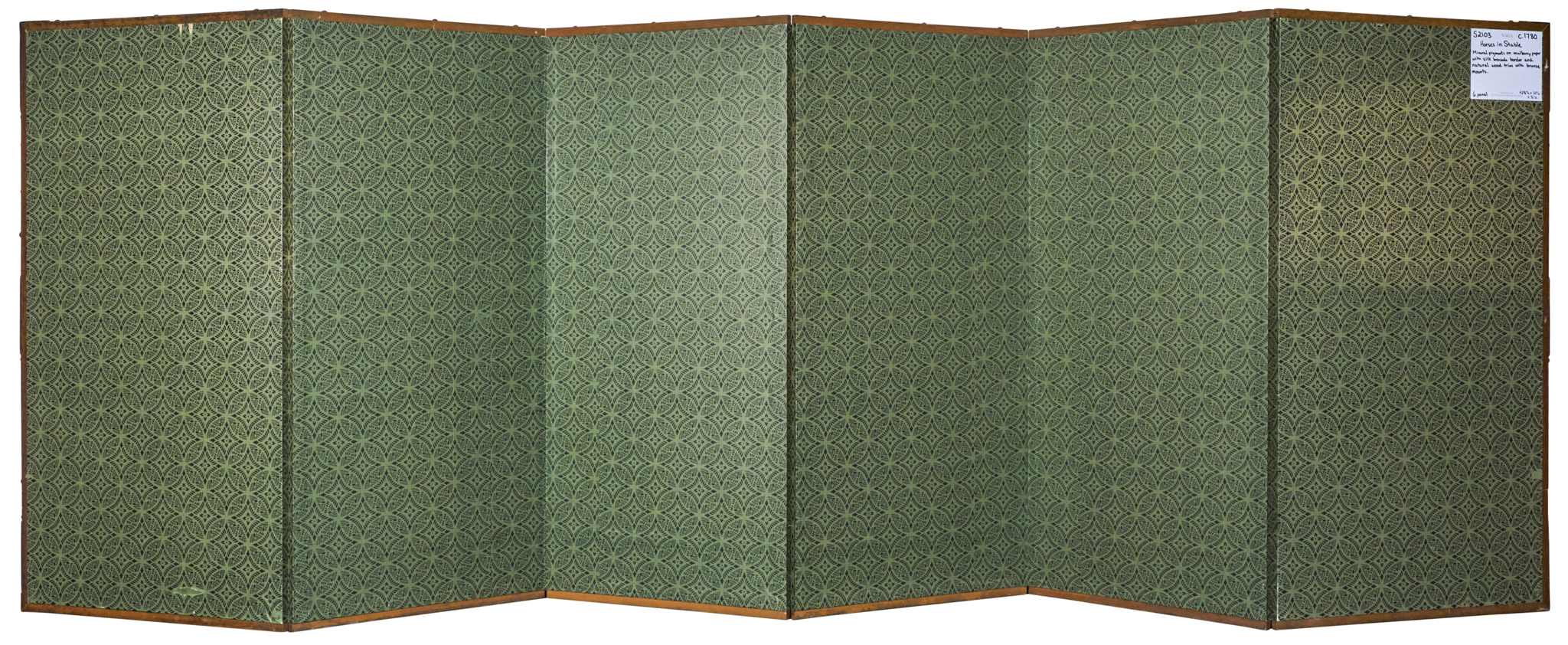
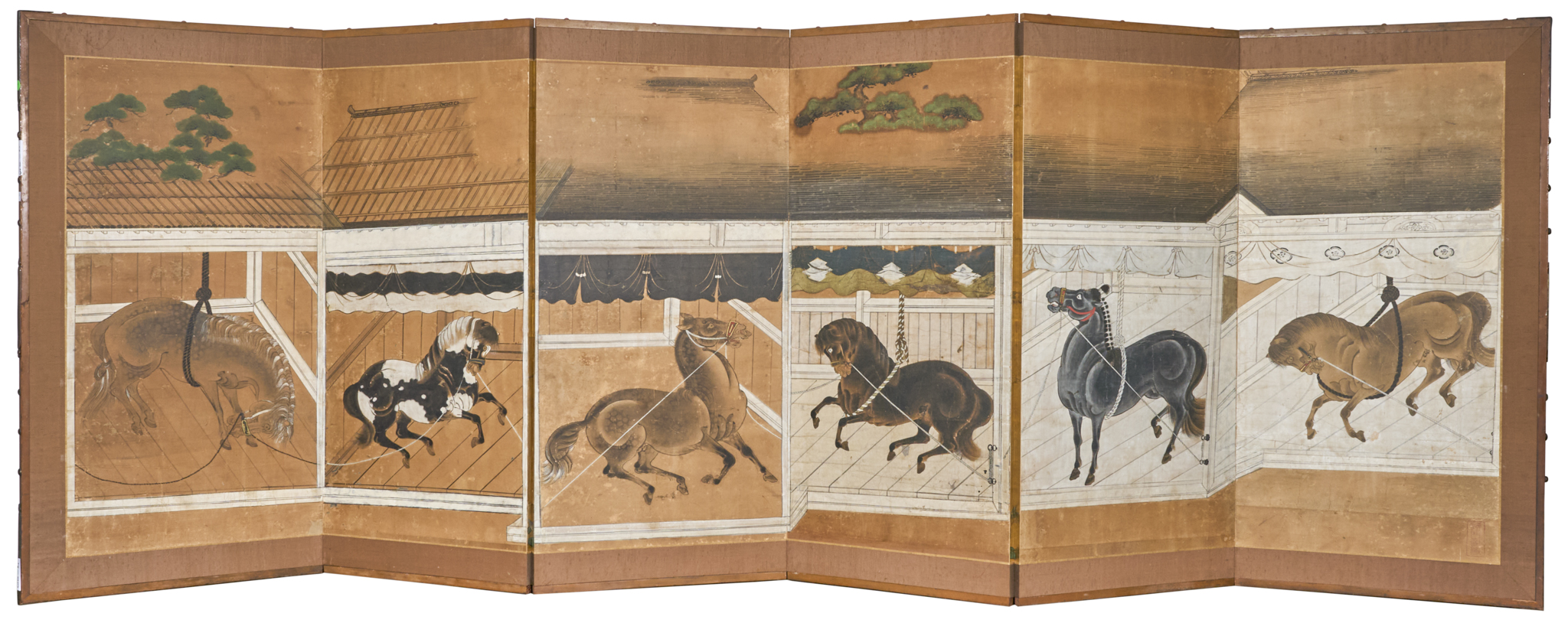
This is a beautiful and evocative antique Japanese six-panel folding screen (Byōbu), a classic example of the popular "Horses in Stable" (Umaya-zu) motif from the Edo Period (1603-1868). This folding screen presents a refined, panoramic view of a horse stable, a subject historically favored by the samurai class as a display of wealth, power, and high social standing. Six magnificent horses are tethered within individual stalls that form the central composition of the six panels. Each horse is rendered in a distinct pose and color—from dappled black-and-white to rich chestnut and bay— capturing their animated spirit and muscular form. The horses appear vital and well-cared for, underscoring their status as prized possessions. The work is skillfully executed using mineral pigments on mulberry paper (washi), a traditional Japanese medium that lends a soft, earthy tone to the painting. The palette is dominated by ochre, deep browns, and white, contrasted by the structural elements of the stable. The stables are depicted in a stylized manner, with tiled or planked roofs and simplified architectural lines. Notably, the upper border of the screen features simplified depictions of pine trees, a long-standing symbol of longevity and steadfastness in Japanese art, which adds a touch of natural elegance to the scene. The dark upper band of the painting suggests a backdrop of either night or a formalized, abstract space. A traditional silk brocade border and is framed with natural wood trim and decorative bronze mounts, preserving its structural and aesthetic integrity. The screen bears a seal that reads "Kinran zu ga"
- Period
- Later Edo Period, c.1800
- Origin
- Japan
- Dimensions
- 42.75" h x 121" w x .75" d
- 108.6cm h x 307.3cm w x 1.9cm d
- Item #
- S2103
- Price Range
- $0-$5,000
- $5,001-$10,000
- $10,001-$25,000
- $25,001-$50,000
- $50,001-$100,000
- over $100,000