
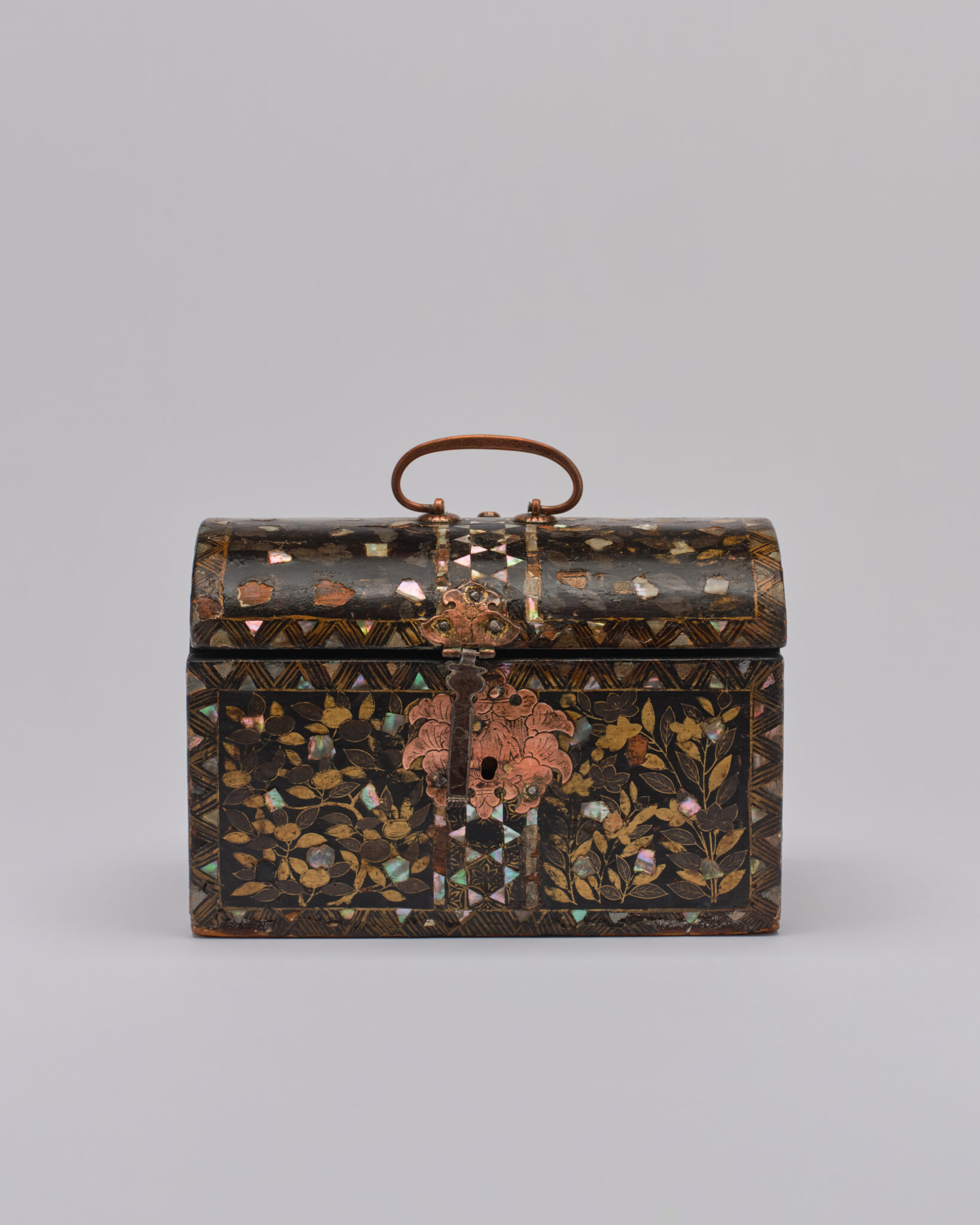
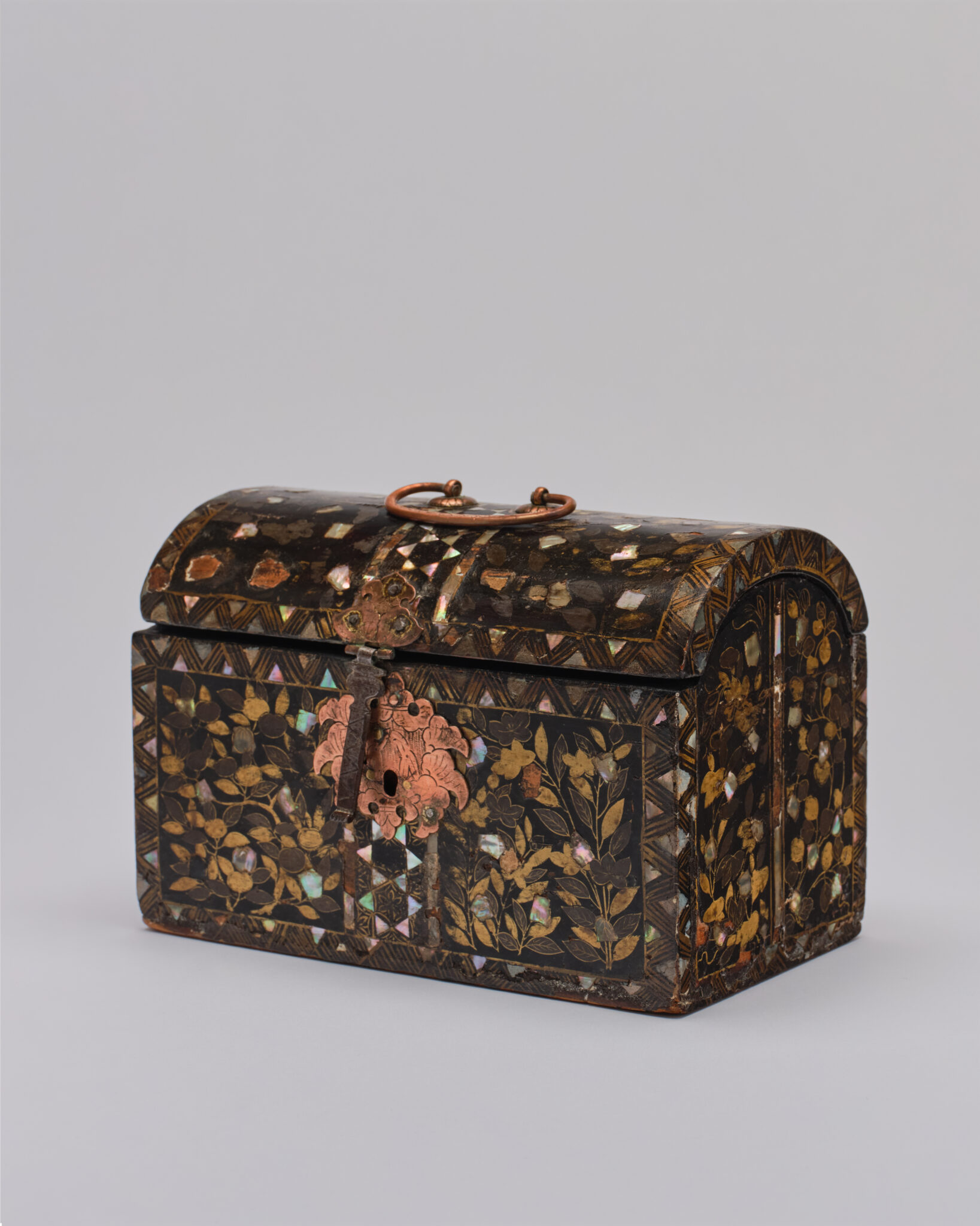
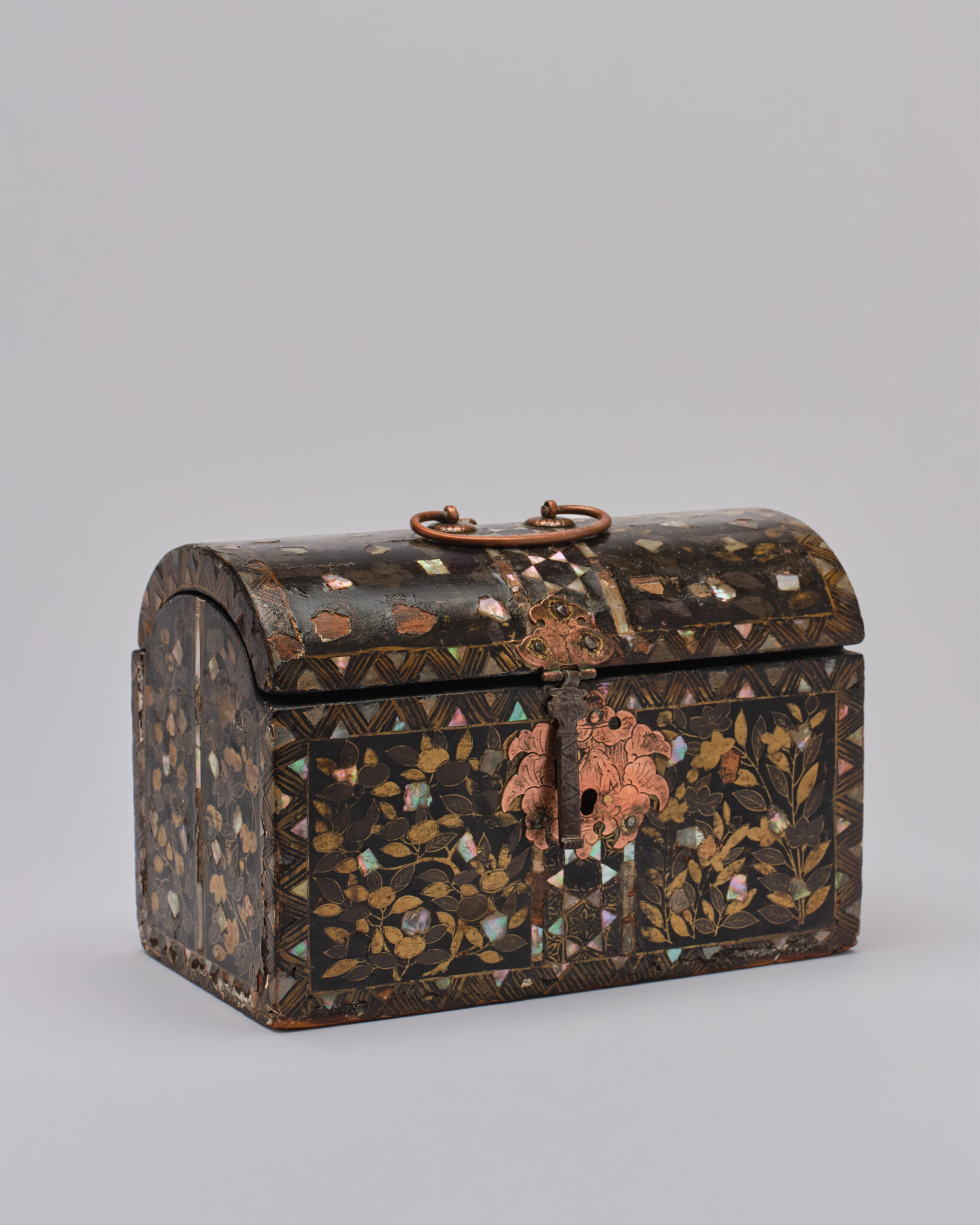
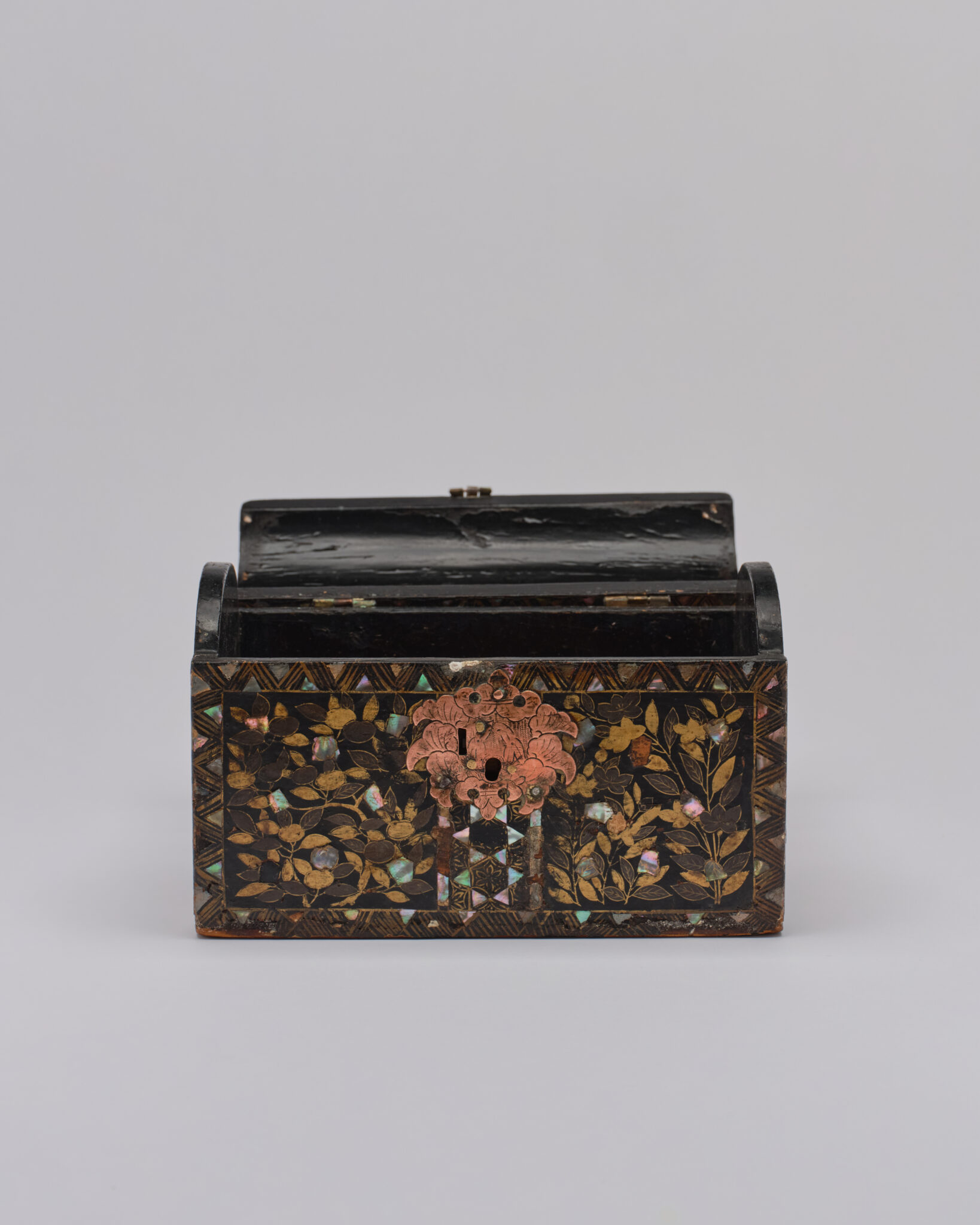
Japanese Nanban Lacquer Coffer with Handle
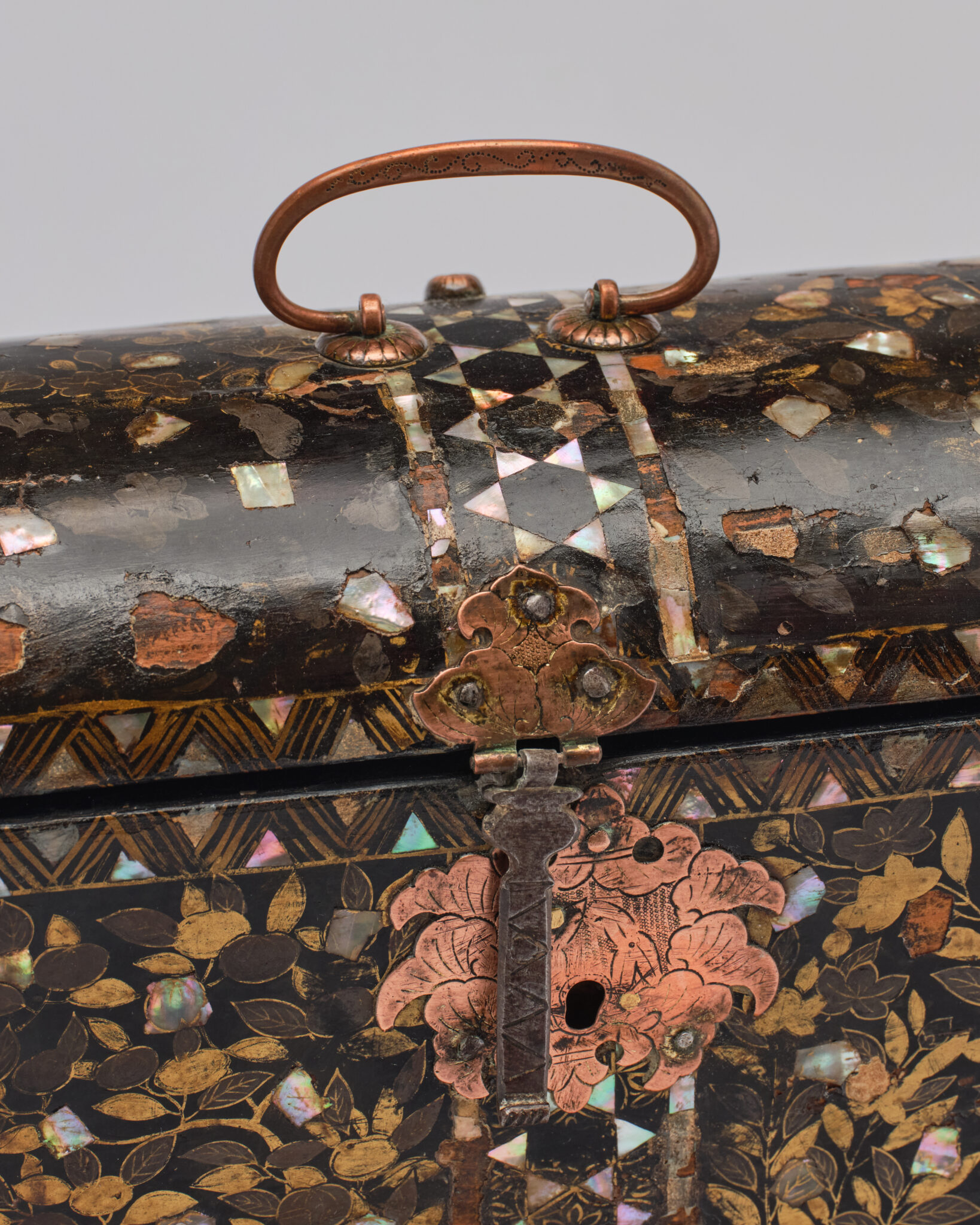
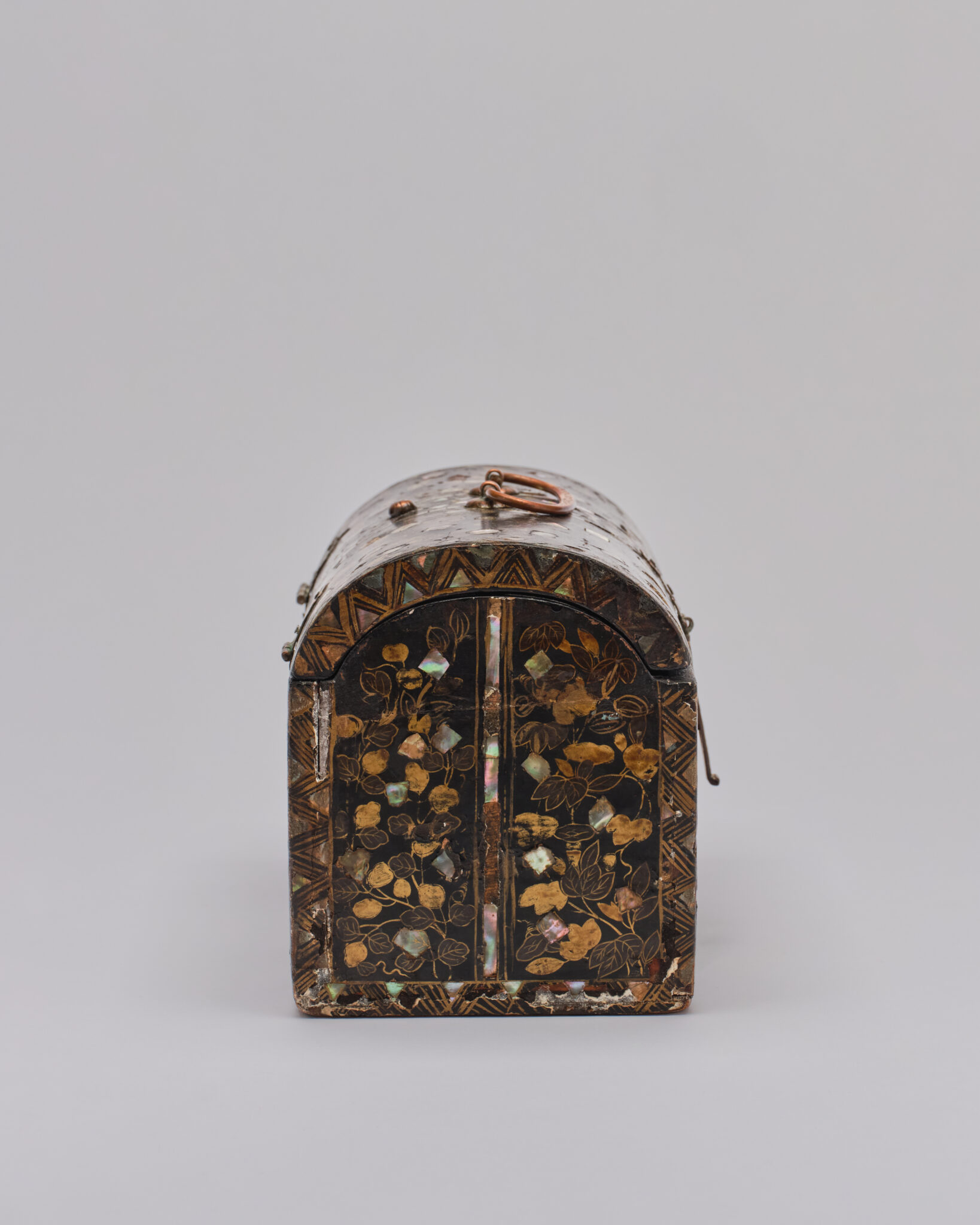
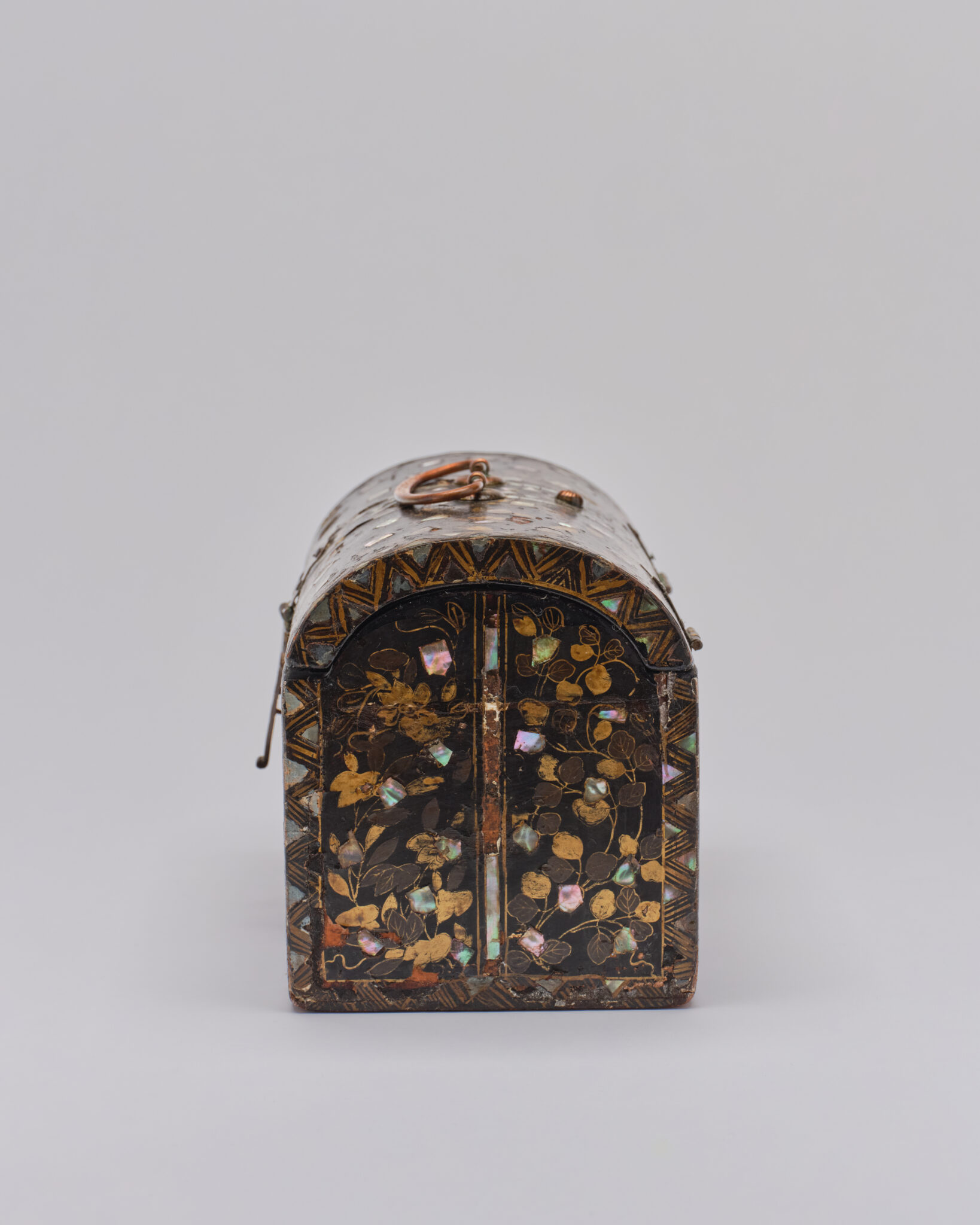
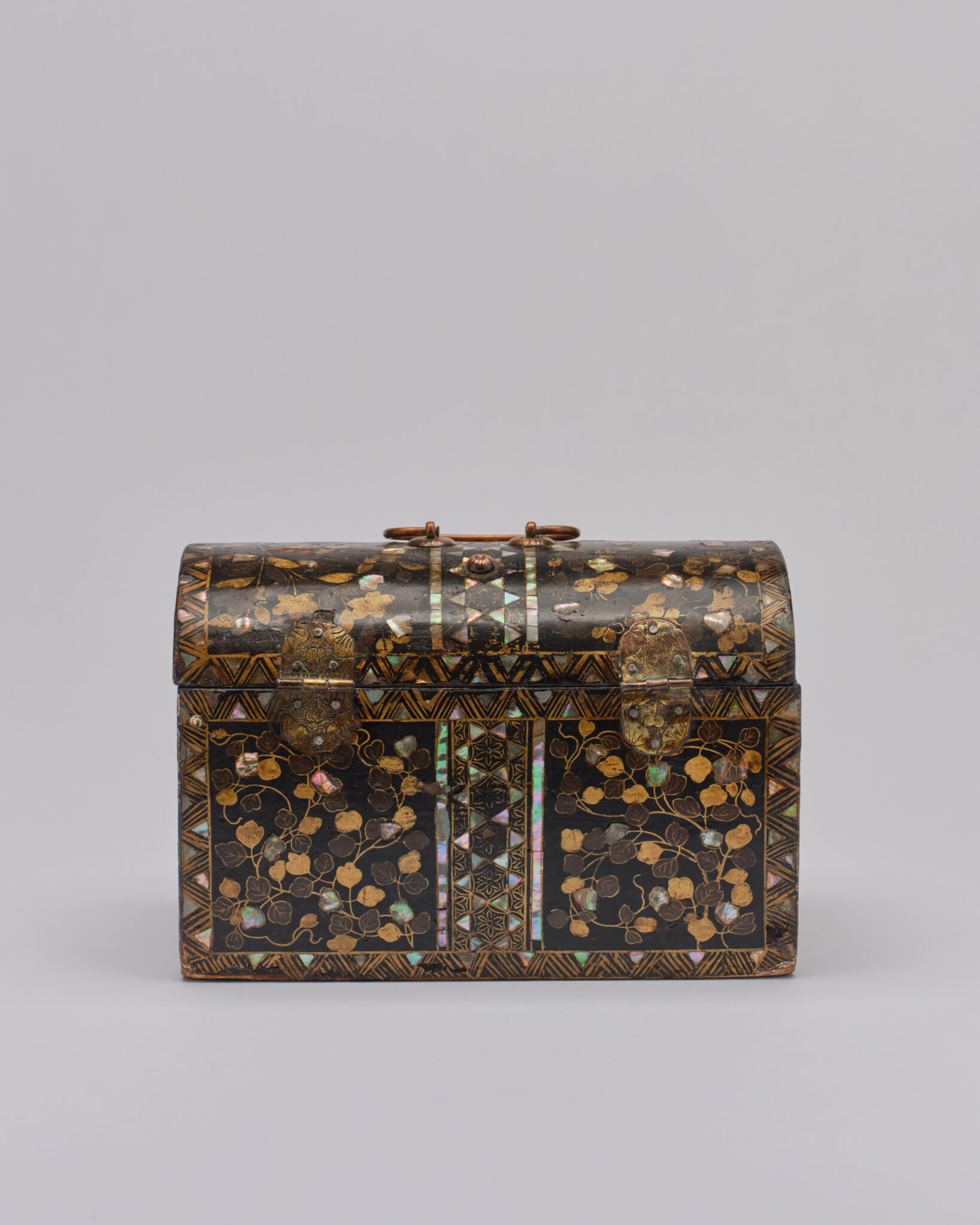
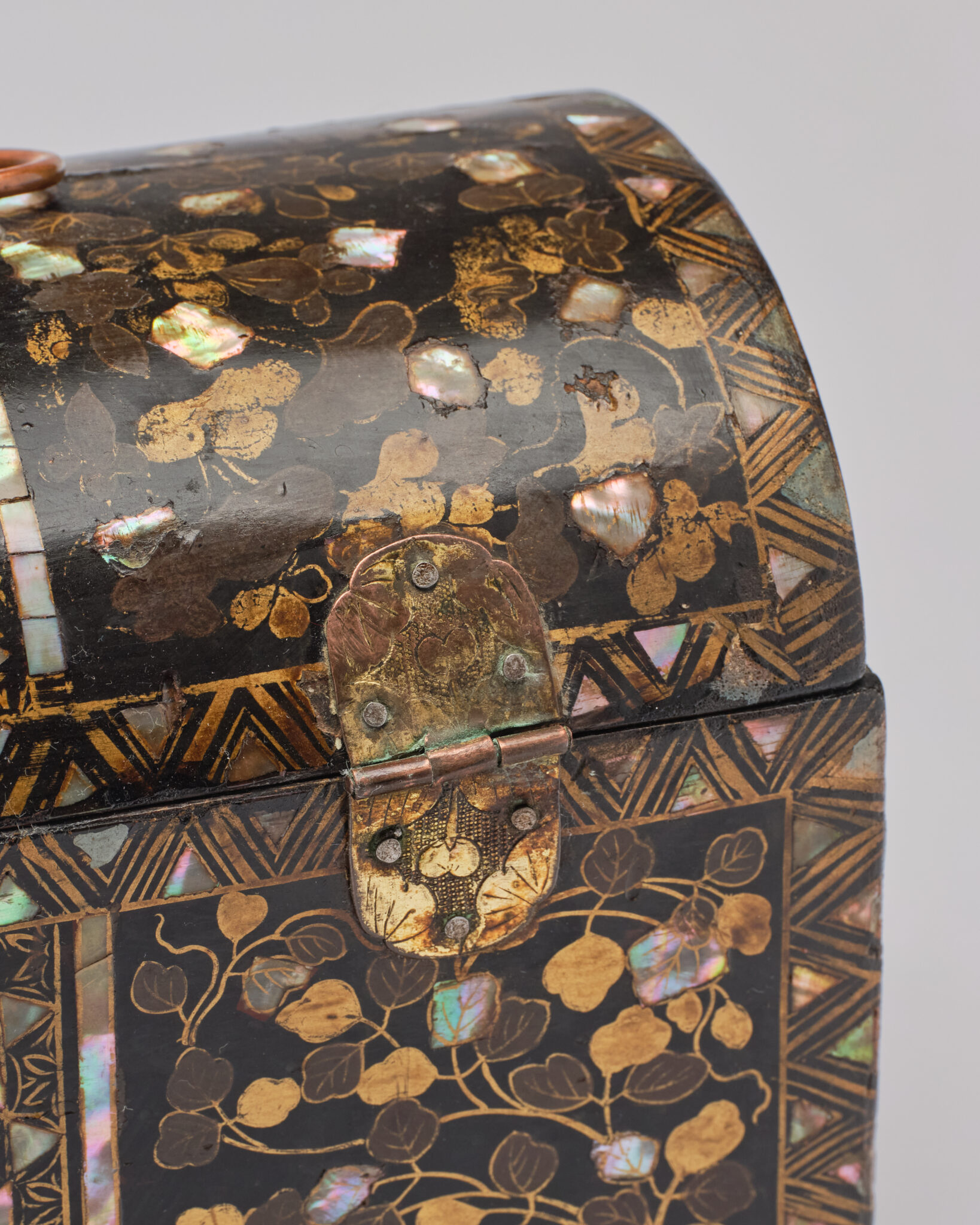
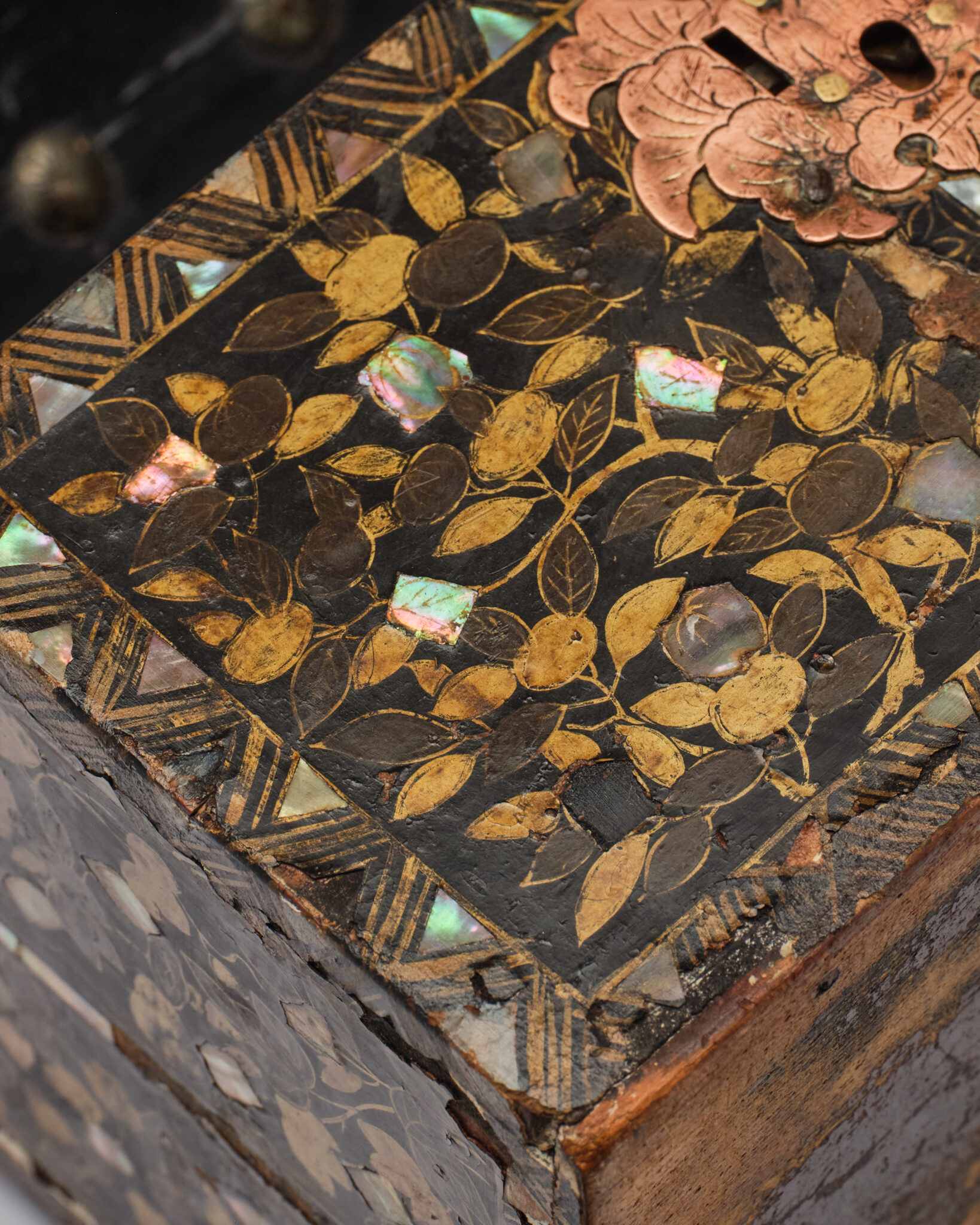
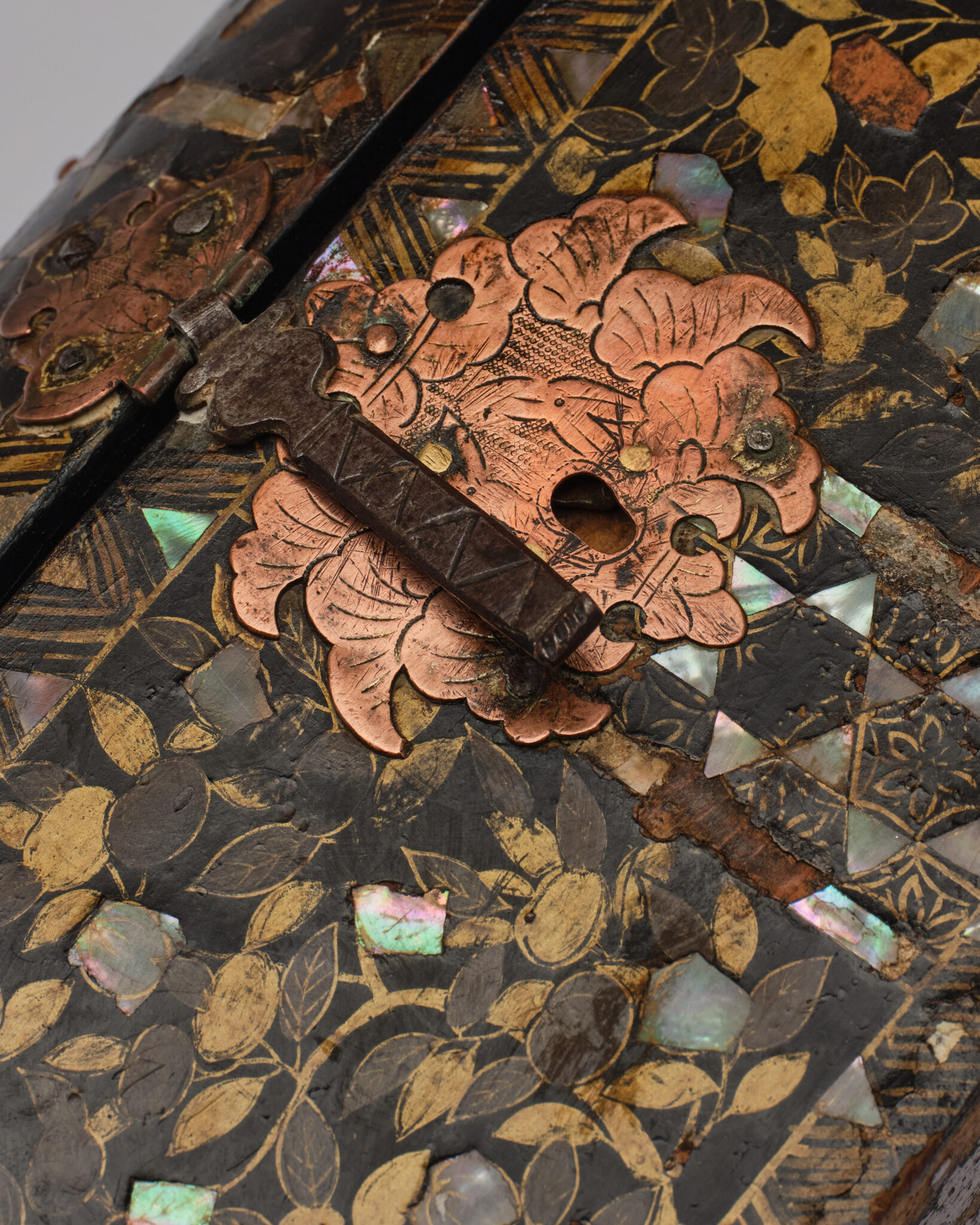
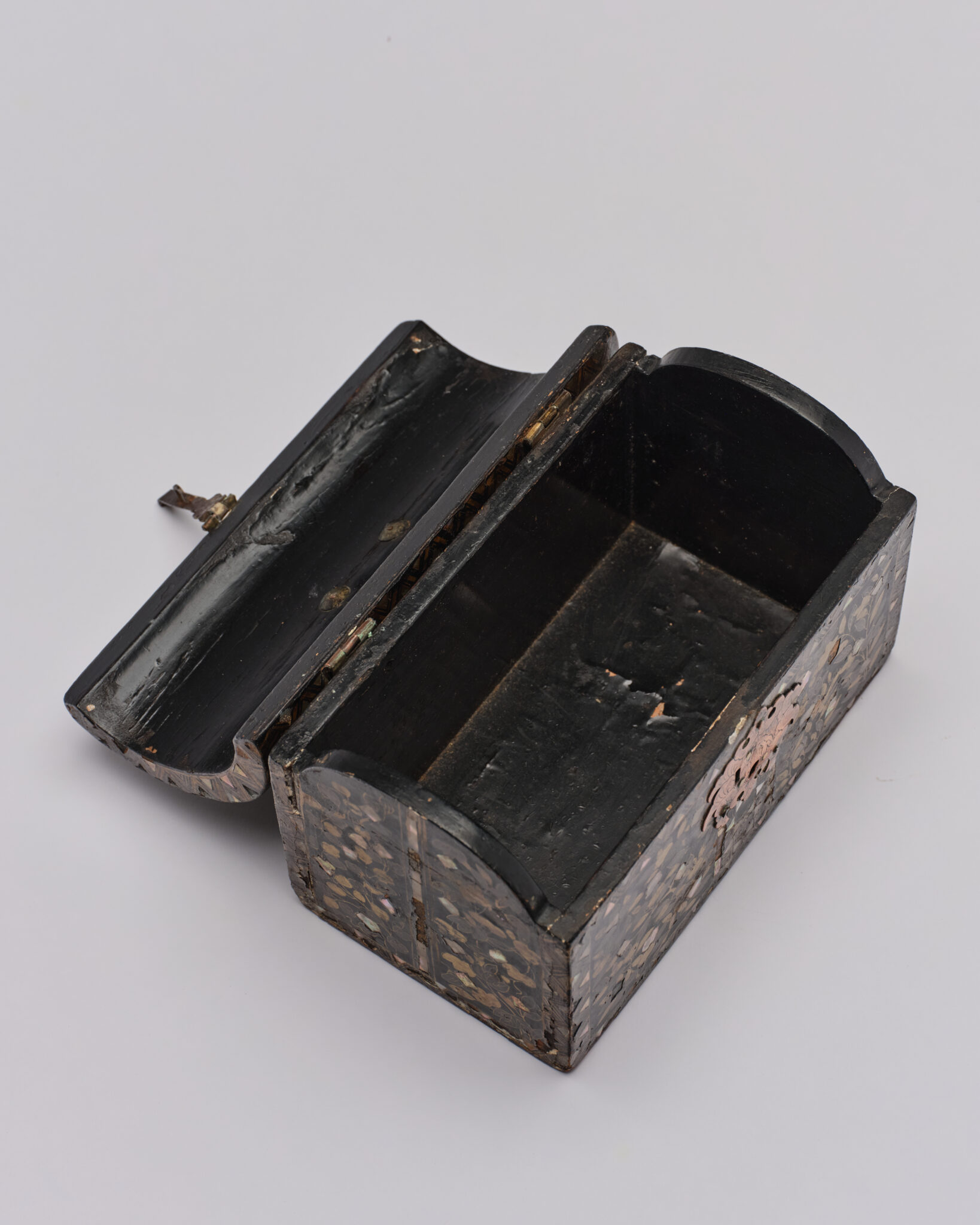
A Japanese lacquer coffer of rectangular form with a domed lid, decorated with mother-of-pearl inlay depicting stylized flowers and foliage against a black lacquer ground. Fitted with decorative bronze hardware.
Nanban lacquerware developed in Japan during the late 16th and early 17th centuries, following the arrival of Portuguese traders and missionaries. The term Nanban, meaning “Southern Barbarians,” was used by the Japanese to describe these foreign visitors. Produced primarily for export to European markets, these distinctive works combined traditional Japanese lacquer techniques with Western forms and decorative preferences. Gold maki-e, mother-of-pearl inlay (raden), and intricate floral and geometric patterns were characteristic of this highly prized export lacquerware.
Notable examples of Nanban lacquer coffers can be found in the collections of the Metropolitan Museum of Art, New York; the Kyoto National Museum; the British Museum, London; and the Ashmolean Museum, Oxford.
- Period
- Early 17th Century - Momoyama (1568-1603)
- Origin
- Japan
- Dimensions
- 6" h x 9" w x 5 1/8" d
- 15.2cm h x 22.9cm w x 13cm d
- Item #
- NA1919